Equality, Diversity and Inclusion in Pharmacy Education
October 20, 2026
Written by Clare Filipowicz, Quality and Standards Adviser (QASA).
On Pharmacy Technician Day, it feels particularly fitting not only to celebrate the contribution pharmacy technicians make every day, but also to reflect on the people entering and progressing through our pharmacy workforce.
At Open Awards, we’ve recently completed our annual Equality, Diversity and Inclusion review across both our Level 2 Pharmacy Support Staff and Level 3 Pharmacy Technician qualifications.
For us, this work is about much more than producing statistics. It helps us understand who our learners are, whether they are accessing and progressing through their qualifications equitably, what our providers are doing well and, importantly, where we still need to improve.
There is a lot to be positive about.
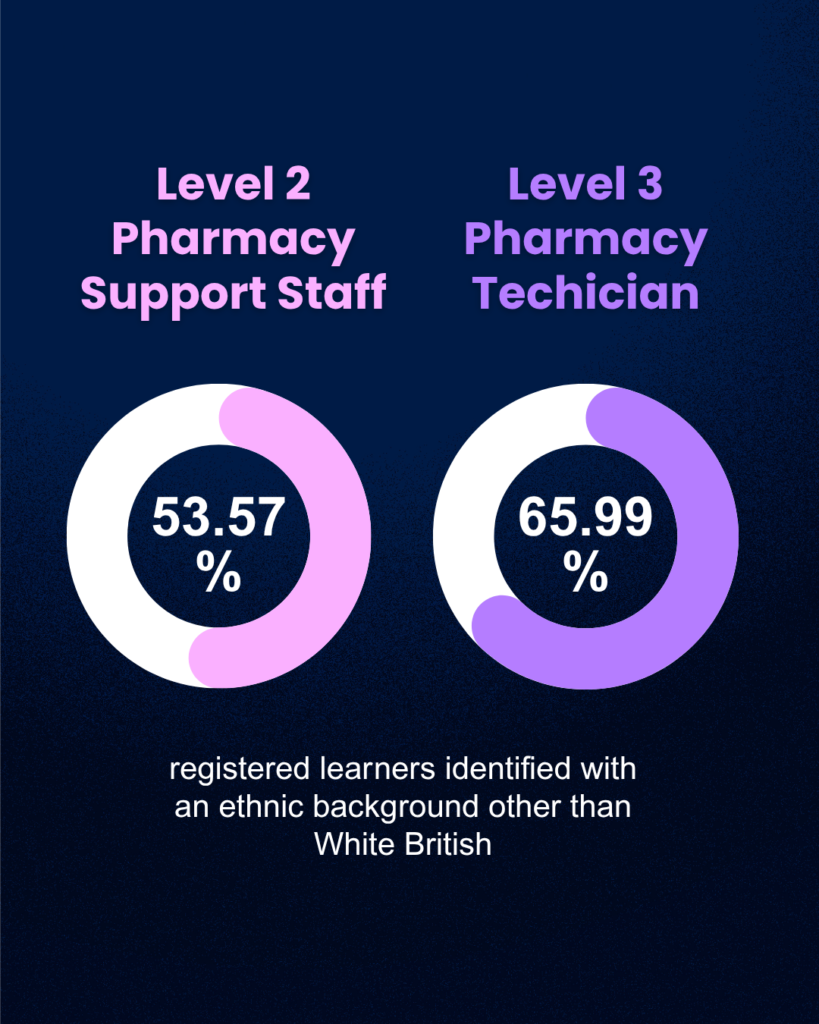
Our pharmacy learner population is diverse. At Level 3, 65.99% of registered learners identified with an ethnic background other than White British, with particularly strong representation from Pakistani and Indian communities. At Level 2, 53.57% of registered learners identified with an ethnic background other than White British, again demonstrating the diversity of those entering and developing within pharmacy support roles.
Both qualifications also continue to attract a predominantly younger workforce. At Level 3, 78.43% of registered learners were under 35, while at Level 2, this figure was 84.82%.
Our quality assurance activity also identified some excellent examples of inclusive practice across providers. These included early identification of additional needs, reasonable adjustments, adapted learning materials, accessible digital platforms, additional pastoral support, functional skills support and varied approaches to assessment.
At Level 3, we saw examples such as assistive technology to support dyslexia and dyspraxia, recorded verbal responses where learners found it difficult to demonstrate knowledge in writing, and thoughtful planning around religious observance, including Ramadan.
At Level 2, providers demonstrated initial assessment and SEND screening, tailored support, adapted learning resources, accessible platforms, ongoing progress reviews and broader assessment approaches such as presentations, professional discussions and holistic evidence.
Encouragingly, neither review identified evidence of a significant equality issue requiring immediate intervention. However, good EDI monitoring should do more than confirm what is working — it should help us spot where we need to ask further questions.
One important area is learner withdrawal.
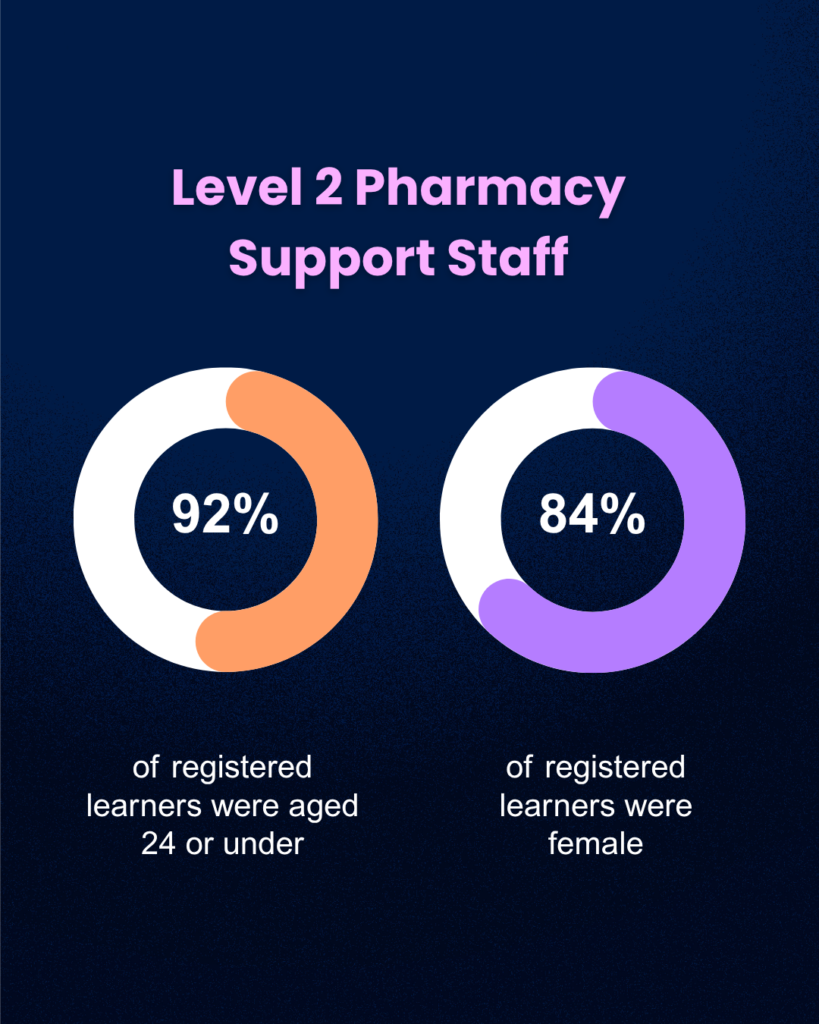
At Level 2, learners aged 24 or under represented 61.61% of registrations but 92% of the withdrawal dataset, while females represented 67.86% of registrations but 84% of withdrawals. These are not matched cohorts, so the figures cannot be interpreted as withdrawal rates. However, they highlight an important area for further exploration through longitudinal analysis.
At Level 3, female learners also represented a greater share of withdrawals than male learners, and the review identified this as an area for continued investigation and monitoring.
Another shared theme across both Level 2 and Level 3 is data quality.
Religion and sexual orientation remain our least complete EDI datasets. There is an important distinction here: “Prefer not to say” is a valid learner choice and should always be respected. “Data not available” is something we should seek to reduce.
That means providers have an important role to play.
Staff involved in recruitment, selection, enrolment and learner registration should be appropriately trained in EDI and understand why this information is collected, how it is used and how to explain it sensitively and confidently to learners.
- Make sure staff involved in recruitment and enrolment understand EDI monitoring and receive appropriate training.
- Explain to learners why EDI information is collected, how it supports fair and equitable provision and that disclosure of sensitive information remains voluntary and confidential.
- Keep “Prefer not to say” as a valid learner choice, but avoid “Data not available” where information has simply not been requested or recorded.
- Review your own registration, achievement and withdrawal data by protected characteristic and ask whether any patterns need further investigation.
- Identify support needs early, implement appropriate reasonable adjustments and continue reviewing support throughout the learner journey.
- Use inclusive and varied learning and assessment methods wherever qualification requirements allow.
- Share examples of effective inclusive practice so that providers can learn from one another through quality meetings and standardisation activity.
Our next step is to strengthen matched-cohort and longitudinal analysis across both Level 2 and Level 3, following learners from registration through to achievement or withdrawal. This will help us move beyond annual snapshots and better understand whether different groups of learners experience different outcomes over time.
For me, that is what meaningful EDI work should be about.
It is not simply about collecting data because we are required to, but about using it to ask better questions, recognise good practice, identify possible barriers and improve the experience of learners.
On Pharmacy Technician Day, this is a timely reminder that building a diverse, inclusive and successful pharmacy workforce starts with the opportunities, support and experiences we provide to learners today.
Latest News
Equality, Diversity and Inclusion in Pharmacy Education
Open Awards welcomes the Lord-Lieutenant of Merseyside

Top 5 Curriculum Planning Tips for Education Providers

What Wales Needs Beyond GCSEs